


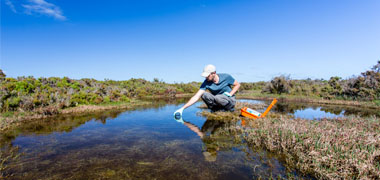
Marine Conservation courses in Melbourne
Course providers in Melbourne
The following providers offer Marine Conservation courses in Melbourne.
Advance Community College
4016
1

ARO College
40056
2

Australian College of Agriculture & Horticulture
21316
1

Go Training
45757
1
Procon Training
45534
1

COVE Training
21386
1
Active TEC
40507
1

Construction Training Group
21396
1

WAM Training
22054
1

Star Training & Assessing
21830
1
Australian Construction Equipment Training
21716
1
CFMEU Education & Training
3688
1

Interlink Training
21055
1

Construction Training International
7107
1

1 Stop Training
46133
1
The University of Melbourne
3
RMIT University
3046
3

Monash University
4

Charles Sturt University
2

Deakin University
2

Swinburne University of Technology
3059
1

Insight Academy
41393
1

Australian Institute of Management
0049
1

TAFE NSW
90003
1

South Metropolitan TAFE
52787
1

Career Pathfinder
Skills shortages + AI Exposure
Discover in-demand careers and understand how each role may be impacted by AI and automation.
A tool for students to:
- See in-demand occupations across Australia
- Check AI Exposure ratings
- Compare training duration and average income
Further reading

Most popular animal welfare and veterinary courses
12th April 2022
Careers for people who love the outdoors
14th September 2021All courses
- Bachelor of Maritime Engineering (Naval Architecture) (Honours)
- Bachelor of Science (Ecology and Conservation Biology)
- Bachelor of Marine Science
- AHC10124 Certificate I in Conservation and Ecosystem Management
- MSS50222 Diploma of Environmental Monitoring and Technology
- Master of Marine Science and Management
- Master of Science (Aquaculture Science and Technology)
- Bachelor of Environmental Science
- Graduate Diploma in Environmental Science
- AHCLPW307 Perform Restricted Diving for Scientific Purposes
- Bachelor of Science (Marine Science)
- Bachelor of Environmental Science (Marine Biology)
- Bachelor of Surveying and Spatial Science
- Bachelor of Science (Honours) (Biological Sciences)
- Master of Environmental Science
- Bachelor of Science (Earth Science)
More about Marine Conservation courses
If you're passionate about ocean life and eager to play a role in protecting our marine environment, Melbourne offers a range of Marine Conservation courses tailored to various experience levels. Whether you're starting fresh or looking to enhance your qualifications, you can find the perfect course to suit your needs. With a total of 14 courses available in the Melbourne area, the education pathway is rich and varied.
For beginners, introductory courses such as the Certificate II in Conservation and Ecosystem Management AHC21024 and the Certificate III in Conservation and Ecosystem Management AHC31421 provide foundational knowledge in conservation practices. These qualifications prepare you for entry-level roles within the marine conservation field, equipping you with essential skills to kick-start your career.
For those with prior experience or qualifications, Melbourne’s advanced courses present excellent opportunities for professional development. Pursuing a Bachelor of Science (Marine Biology) or a Master of Environmental Science can significantly enhance your expertise and position you favourably for roles in marine research, environmental consultancy, and conservation management. With a focus on real-world applications, these courses are offered by reputable training providers such as RMIT University and The University of Melbourne.
In addition to advanced academic qualifications, Melbourne's vocational training options also include qualifications like the Certificate IV in Sustainable Operations MSS40122, which supports careers in sustainability practices. Training providers like Kangan Institute and Deakin University are at the forefront of delivering practical, hands-on courses designed to meet industry needs.
Whether you're set on pursuing a career in Marine Conservation, Conservation and Land Management, or Environmental Management, Melbourne's training providers are ready to guide you. Making the most of the diverse educational opportunities right here in Victoria will surely set you on a fulfilling path in marine conservation, where your efforts can help protect and sustain our invaluable ocean ecosystems.