




Environmental Management courses in Bundaberg
Course providers in Bundaberg
The following providers offer Environmental Management courses in Bundaberg.
Australian College of Business Intelligence
40835
1

Engineering Institute of Technology
51971
4

ARO College
40056
2

TAFE NSW
90003
2

RuralBiz Training
90782
3

Ulleo
1

SDS Training
32505
1

RudTek
31953
1
Foundation Training Australia
31972
1

Global Training Institute
31192
1

TasTAFE
60142
1

Tocal College
91166
2

Australian College of Agriculture & Horticulture
21316
3

Timber Training Creswick
4168
1

Built Form Design Academy
45170
1

Digital Construction Academy
31840
1

National Skills
45438
1

Education In Building
32418
1

Wodonga TAFE
3097
1
North Regional TAFE
52788
1
Ballistic Training Solutions
41097
1
Yalga-binbi Institute for Community Development
31116
1

National Training Masters
91284
1

Careers Training Centre
40557
1

Box Hill Institute
4687
1
Central Regional TAFE
52789
1

UNE Partnerships
6754
1

Envirotech Education
31871
1

Career Pathfinder
Skills shortages + AI Exposure
Discover in-demand careers and understand how each role may be impacted by AI and automation.
A tool for students to:
- See in-demand occupations across Australia
- Check AI Exposure ratings
- Compare training duration and average income
Further reading
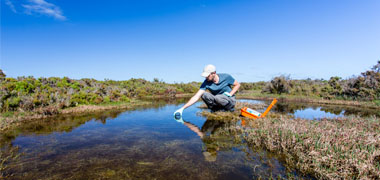
Most popular environment and sustainability courses
12th June 2022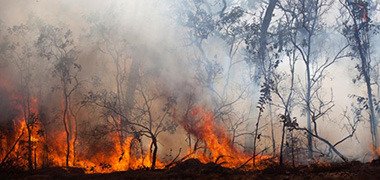
3 online courses that can help you tackle climate change
14th January 2020All courses
- MSS50122 Diploma of Sustainable Operations
- 11130NAT Certificate IV in Environmentally Sustainable Management
- Professional Certificate of Competency in Carbon Capture
- AHC50422 Diploma of Horticulture Management
- 52925WA Graduate Certificate in Water Resources Engineering
- Professional Certificate of Competency in Green Building: Carbon Management in Infrastructure
- Professional Certificate of Competency in Fundamentals of Electric Vehicles
- Garden & Landscape Design Essentials
- Bachelor of Advanced Science (Honours) (Archaeological Science)
- Bachelor of Arts (Honours) (Environmental Studies)
- Master of Environment
- Graduate Certificate in Environmental Management
- Bachelor of Sustainability
- Bachelor of Science (Geology)
- Graduate Certificate in Environmental Assessment and Management
- AHC51120 Diploma of Conservation and Ecosystem Management
- MSS50116 Diploma of Sustainable Operations
- AHC31120 Certificate III in Nursery Operations (Nursery Production)
- AHC60415 Advanced Diploma of Conservation and Land Management
- CPP40919 Certificate IV in Waste Management
- RII30320 Certificate III in Underground Metalliferous Mining
- Graduate Certificate in Planetary Health
More about Environmental Management courses
Environmental management is a vital field that focuses on the protection and sustainable use of natural resources, and Bundaberg offers a range of courses for individuals looking to develop their skills in this area. With 2 courses available specifically geared towards beginners, those new to the environmental management sector can start their journey with confidence. Among the beginner courses, the Inspect and Clean Machinery, Tools and Equipment to Preserve Biosecurity (AHCBIO203) course provides essential training for individuals looking to ensure equipment is maintained to protect biosecurity. This is particularly relevant for the agricultural sector prevalent in Bundaberg.
Another invaluable option is the Certificate II in Conservation and Ecosystem Management (AHC21024). This course equips learners with foundational knowledge and skills crucial for roles such as Conservation Officer or Environmental Technician. By completing this qualification, graduates can pursue rewarding careers focusing on the stewardship of natural ecosystems in and around the Bundaberg area, renowned for its biodiversity and natural beauty.
In Bundaberg, environmental management training is provided by reputable local Registered Training Organisations (RTOs) and recognised industry bodies, ensuring high-quality education in the field. The demand for qualified professionals in environmental management continues to grow, driven by the increasing need for sustainability and conservation efforts related to local ecosystems. As such, graduates of these programs will find themselves well-prepared for various job opportunities within this essential sector, helping to contribute to long-term environmental goals.
Enrolling in one of the environmental management courses not only provides essential knowledge but also fosters a deeper connection with the local environment. Individuals considering a career in this field in Bundaberg can explore all available options on the Courses.com.au page for Environmental Management Courses in Bundaberg. By choosing to further their education through these beginner courses, they will be taking an important step towards safeguarding the local environment and promoting sustainable practices in their communities.