Environmental Economist Courses
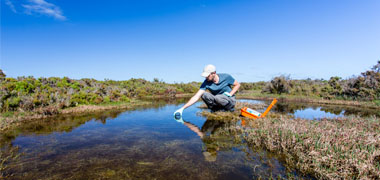
An Environmental Economist analyses the economic impacts of environmental policies, focusing on data analysis and sustainability to inform decision-making.
AI Exposure
High

AI exposure data adapted from Felten, Raj & Seamans (2021). Shortage data sourced from Jobs and Skills Australia (2024).
View all courses
How do I become a Environmental Economist
Get qualified to work as a Environmental Economist with a course recognised across Australia. Speak to a training provider to learn more.
Estimated fee
From $24,450
Study mode
Blended, On Campus
The Bachelor of Science (Sustainability) focuses on interdisciplinary approaches to create sustainable societies and solutions. It blends physical and social sciences with humanities, grounded in both local and international research. This course emphasizes hands-on, problem-solving methods, preparing you for diverse fields and careers dedicated to sustainability. It offers specialised knowledge beneficial for those interested in fostering sustainable practices.
Career opportunities
Estimated fee
From $24,450
Study mode
Blended, On Campus
Find a provider
Estimated fee
From $44,358
Study mode
Blended, On Campus, Online
The Bachelor of Business (Economics) delves into how resources are allocated among people and organisations. The focus is on topics such as consumer and business behaviour, job markets, and global trade. Graduates are prepared to understand economies on both large and small scales. Possible career paths include roles like economist, investment analyst, or strategist. The course material emphasizes the theories of economics and how government policies affect economic activities, including supply and demand and pricing.
Career opportunities
Estimated fee
From $44,358
Study mode
Blended, On Campus, Online
Find a provider
Estimated fee
From $43,068
Duration
24 months - 3 years
Study mode
Blended, On Campus, Online
The Bachelor of Commerce (Economics) delves into the efficient allocation of resources in societies. It provides knowledge on economic tools, their application in business and policy, and the interactions between individuals, firms, and governments. This course explores diverse topics including labour, health care, financial investments, and taxation. Students will grasp how economies function and be equipped to evaluate and instigate policy shifts.
Career opportunities
Estimated fee
From $43,068
Duration
24 months - 3 years
Study mode
Blended, On Campus, Online
Find a provider
Estimated fee
From $43,500
Study mode
Blended, On Campus, Online
If you want a career in the world of business and finance, the Bachelor of Economics is perfect for aspiring economic advisors, modellers, and analysts. You’ll gain essential knowledge of microeconomics, macroeconomics, business statistics and analytics, then pursue a study major to support your career interests.
BEC study majors may include: applied economics, environmental analysis and policy, economic development, data analytics, macroeconomics and financial markets. You may also benefit from comple...
Career opportunities
Estimated fee
From $43,500
Study mode
Blended, On Campus, Online
Find a provider
View all
Related career opportunities
Browse occupations related to Environmental Economist.
Choose a field of study

Want to make a difference in the world by creating sustainable workplaces and communities? Find out how at Courses.com.au.
All courses

Pursue careers as Park Rangers, Land Managers, and Conservation Managers, making a lasting impact on the environment. Pathways for domestic and international students.
Career opportunities
View all

Learn to monitor and enhance sustainability practices across industries, paving the way for a greener future. Pathways for domestic and international students.
Career opportunities
View all

Discover your passion for marine conservation and turn it into a rewarding career with nationally recognised training courses. Pathways for domestic and international students.
Career opportunities
View all
All courses
More information
An Environmental Economist analyses the economic impacts of environmental policies and resources. You may work in government, NGOs, or research institutions, focusing on cost-benefit analyses and sustainability. Key responsibilities include data analysis and policy evaluation.
Environmental Economists play a vital role in informing sustainable practices. You’ll need strong analytical and communication skills to effectively translate economic data into actionable insights for decision-makers.

Courses by location